Oops, there it is again… Osprey 2.0
It’s been two weeks since I last saw the osprey down in the Forty Acre Wood. I didn’t realize how much I missed them until this past Tuesday. So many of the birds have migrated now that the woods are still and quiet, even with the fall splendor beginning. I was managing just fine.
Then Tuesday, as I walked beside the river, I heard a high, piercing call. It was like a shock to the chest. I’ve heard that osprey call nearly every day for months, and I know it well. I hurried to an open spot along the banks and scanned the trees on the other side of the river, where I thought the call had come from. Nothing. Just as I was starting to think that I’d made it up in my head, I heard that call again right overhead, as if the osprey was saying, no, you dummy, look up. And there it was, a beautiful osprey soaring overhead. It passed and continued to glide upriver on the afternoon currents, and although I hoped it might pause on a tree or circle back, it kept going. The rest of the walk passed in a blur of emotion. That night, I told my husband about the osprey sighting.
“Are you sure?” he asked. “I mean, it could have been a hawk.”
I played the moment over in my head. My vision might be spotty, but I’d heard the call. It was unmistakable.
“I’m pretty sure,” I said.
At first, I assumed the bird was a migrant coming south from somewhere colder like Canada or Montana. I mean, what a nice rest stop for some beautiful fall fishing, right? There had been no sign of my resident osprey or, for that matter, any osprey in the valley for weeks. I can see several nests on my drive into town and they’d all stood depressingly empty.
On Thursday, I returned to the Forty Acre Wood. I’d moved away from the river and was deep in the heart of the woods in my favorite little clearing. I’d just discovered that the bears seemed to like my secret spot as well, and they’d recently had some, er, digestive trouble thanks to the human trash in their scat. I cleaned up some of the trash in the clearing — oreo wrappers, take-out plastic bags, a bottle of vitamin water and another of vanilla extract (?!), but I’d left the actual scat alone (I’m a good steward but not that good). A little deeper into the clearing, I noticed the unmistakable signs of bear trails heading off through the tall grass into denser bushes.
I was kneeling down in the grass, taking a photo of the light shining through the trees when suddenly I heard that high piercing call again. This time it was much closer. I scrabbled for my cell phone and barely managed to hit record before the osprey flew in low almost directly overhead. It soared off through the trees, and then I sat on the forest floor and watched the video on repeat. Was it an osprey? The photo ID and Google seemed to agree. It was. Two days, two osprey sightings directly overhead after weeks of assuming they’d left the valley. So it suddenly occurred to me to ask Google a question (and back it up with sources): if someone visits an osprey nest nearly every day for months and keeps a quiet and respectful distance, is it possible an osprey could recognize them?
The answer, while cautious, was yes. And why wouldn’t it be? The squirrels and crows recognize me, the hummingbirds and chickadees flit near me in the garden, the robins hop closer to check me out, the bees coexist peacefully as I brush past through the now pathless and overgrown foliage of the garden. Some bird species have facial recognition like bees do. It’s not unrealistic to think that an osprey could habituate to a non-threatening human. Why should it surprise me that an osprey might remember me as well? After all, I have dozens of photos of the osprey making direct eye contact with my camera lens. The truth is that I’d been so busy observing them up in their trees and high aerie world that I never considered they might be observing me as well.
I don’t like to rely too heavily on Google, but I did pose another question about whether this might be the straggler fledgling that I wrote about in October’s mail club dispatch or a migrant. That last fledgling seemed to like change as little as I do. It had called with urgency to its diminishing family frequently and spent time housekeeping the nest even though no one was returning to appreciate it. Stragglers often stay in the valley into mid-October even after they’ve given up the nest. They continue to feed and grow stronger and then hitch a late season ride on an incoming storm that will push them south. This one could also, however, be a migrant.
Either way, the sighting filled me with gladness. I’m grateful for the thrill of hearing that call and seeing them one last time.
So here’s the video, decide for yourself.
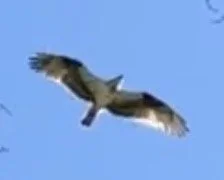
A screenshot of the video
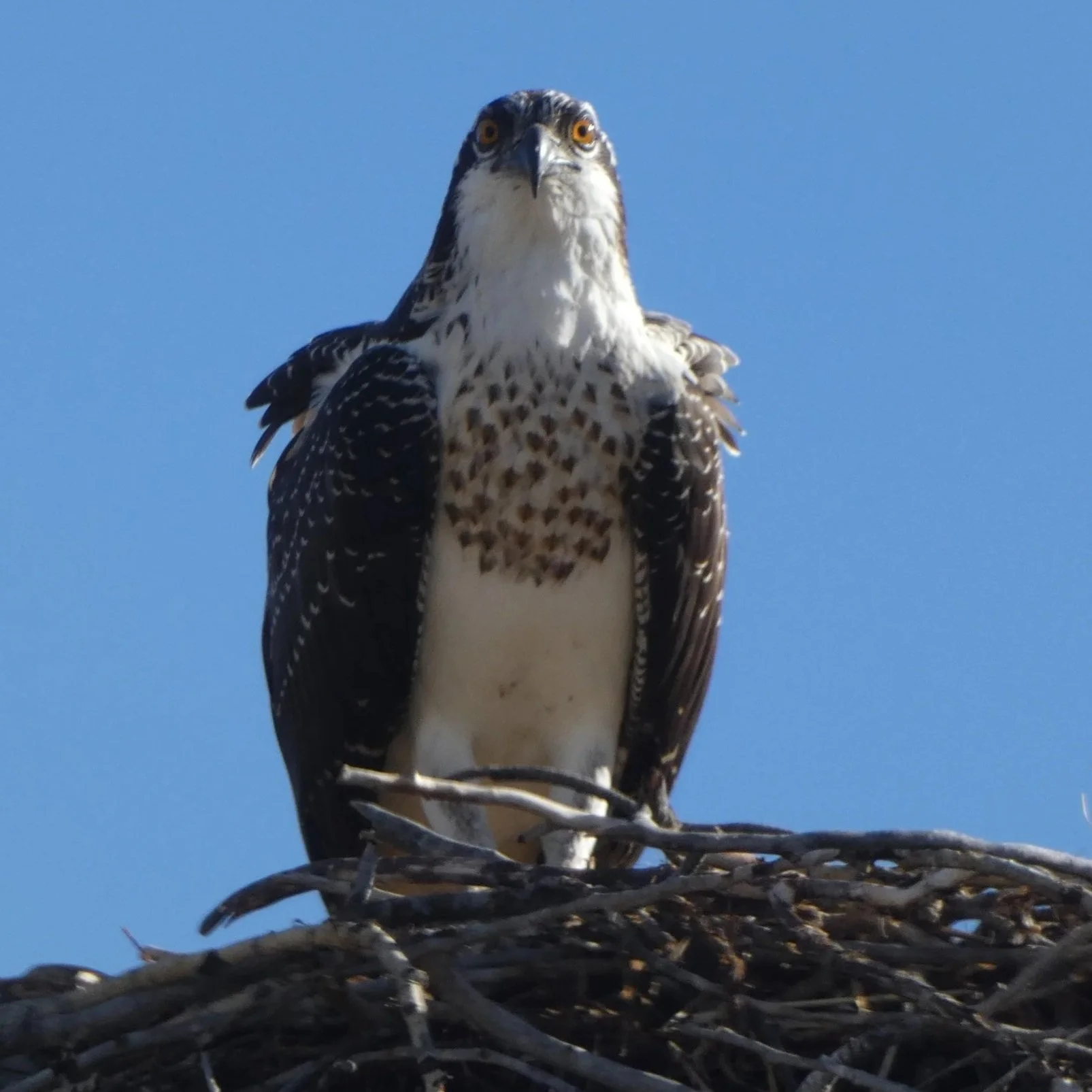
A zoom photo of the fledgling looking right at me the final week I saw it in the nest.